



Picture a mid sized plant. There’s a warehouse bay out back, a small commercial kitchen for the staff cafeteria, locker rooms by the shop entrance, and a huge slab where deliveries land. Four spaces, four very different floors. Someone says “just epoxy it all,” and everyone nods. But that plan skips some important details.
HPS Floors lists four specialized systems on its page, and each one has its own job. Knowing which goes where saves you from patching the wrong thing later. It’s a bit like picking the right shoes for each part of your day, so let’s walk through the building one space at a time.
The Warehouse Bay
Heavy traffic belongs to industrial epoxy and resinous coatings, and epoxy flooring contractors who do this daily will tell you the same. HPS Floors describes high solids, multi coat systems built for extreme forklift traffic, impact and chemical exposure, listed for warehouses, heavy manufacturing, logistics hubs and automotive facilities.
Prep is what makes it last. Shot blasting or diamond grinding creates the CSP for a permanent mechanical bond, and moisture testing happens before coating. Skip those and even the toughest coating can fail early. That rule applies everywhere in the building, not just the bay.
The Staff Kitchen
Kitchens call for something different. HPS Floors recommends urethane cement and slurry systems for commercial kitchens, food and beverage plants and pharmaceutical cleanrooms. They’re thermal shock resistant, built to withstand high temperature washdowns, with seamless radius cove bases that make corners cleaner and help with hygiene.
Locker Rooms and Corridors
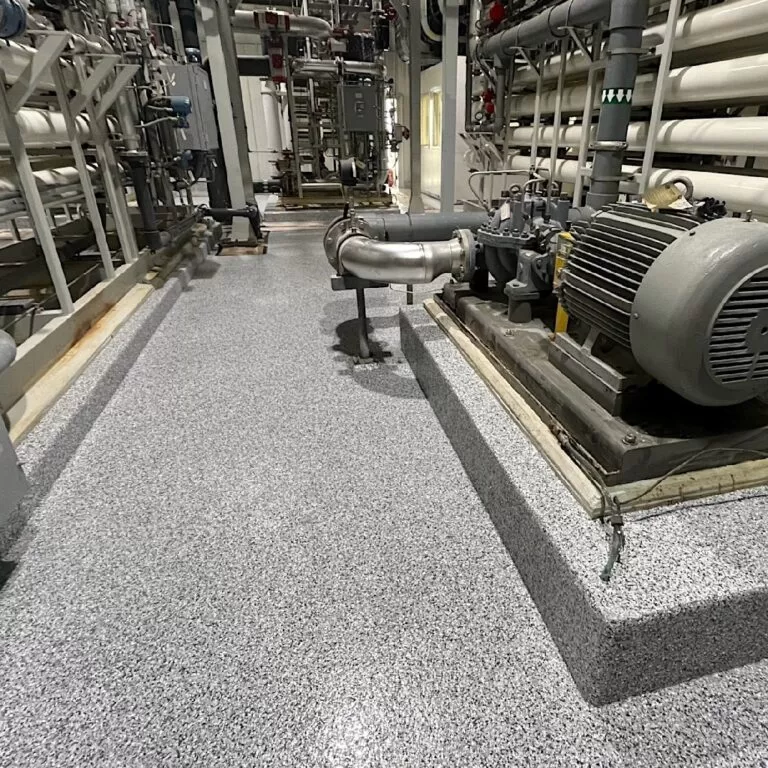
Decorative epoxy flake suits community centers, locker rooms, corridors and multi purpose labs. HPS Floors calls it seamless, slip resistant and highly aesthetic, with multi color flake finishes that handle heavy foot traffic and frequent sanitization. Wet feet and mop buckets are exactly what it’s meant for.
There’s a design benefit too. A blended flake finish hides small scuffs better than a flat color, so the space stays presentable longer. People notice floors like that, even when they can’t say why. It’s a nice bonus on top of the practical grip.
The Delivery Slab
Big open concrete that mostly needs to stop shedding dust is where liquid concrete densifiers come in. HPS Floors says they penetrate deeply to dust proof and harden the surface, economically extending the lifespan of exposed concrete. For huge areas, that can be a smart middle road.
Don’t Forget the Transitions
Where one system meets another, ask how the edges are handled. A good crew thinks about transitions before the job begins. It’s also a good moment to confirm a written warranty covers every area, not just the main floor. Small seams can turn into big complaints later.
Putting It All Together
Hiring one company for all four spaces keeps prep standards consistent and schedules simpler. HPS Floors offers every system listed here and uses its own seasoned crews, with no subcontractors. That means one set of people to call when a question comes up mid project.
Material choice isn’t locked to a single brand either. HPS Floors sources resins, urethanes and hardeners from top suppliers, so each space can get what suits it. Share your cleaning chemicals, traffic and moisture issues up front and let those details guide the plan.
Conclusion
A mixed facility needs a mixed plan, and a thoughtful epoxy flooring contractor will build one around each space. Industrial epoxy for the bay, urethane cement for the kitchen, flake for the locker rooms and a densifier for the slab. Nobody should sell you one answer for everything.